Summation Cheat Sheet
Summation Cheat Sheet - Web summation is a linear operator, so the usual rules for linear operators apply. Web we can find the sum of the series by adding the terms: Web appendix a.8 : Xn i=1 (x i + y i) = n i=i x i + n i=1 y i (7) xn i=1 (x i + y i) k = xn i=1 xk j=0 k j! \sum _ {k=1}^ {5}2k=2+4+6+8+10=30 ∑k=15 2k = 2 +4+6+8+ 10 = 30. In this section we need to do a brief review of summation notation or sigma notation. The sum of the first n n terms of a series can be expressed in summation notation as follows: We’ll start out with two integers, n n and m m, with n <m n < m and a list of numbers denoted as follows, an, an+1, an+2,., am−2, am−1, am a n, a n + 1, a n + 2,., a m − 2, a m − 1, a m. Xk j i y j (8) xn i=i cx i = c xn i=1 x i (9) it is sometimes helpful to rewrite sums. \sum _ {k=1}^ {n} {a}_ {k} ∑k=1n ak.
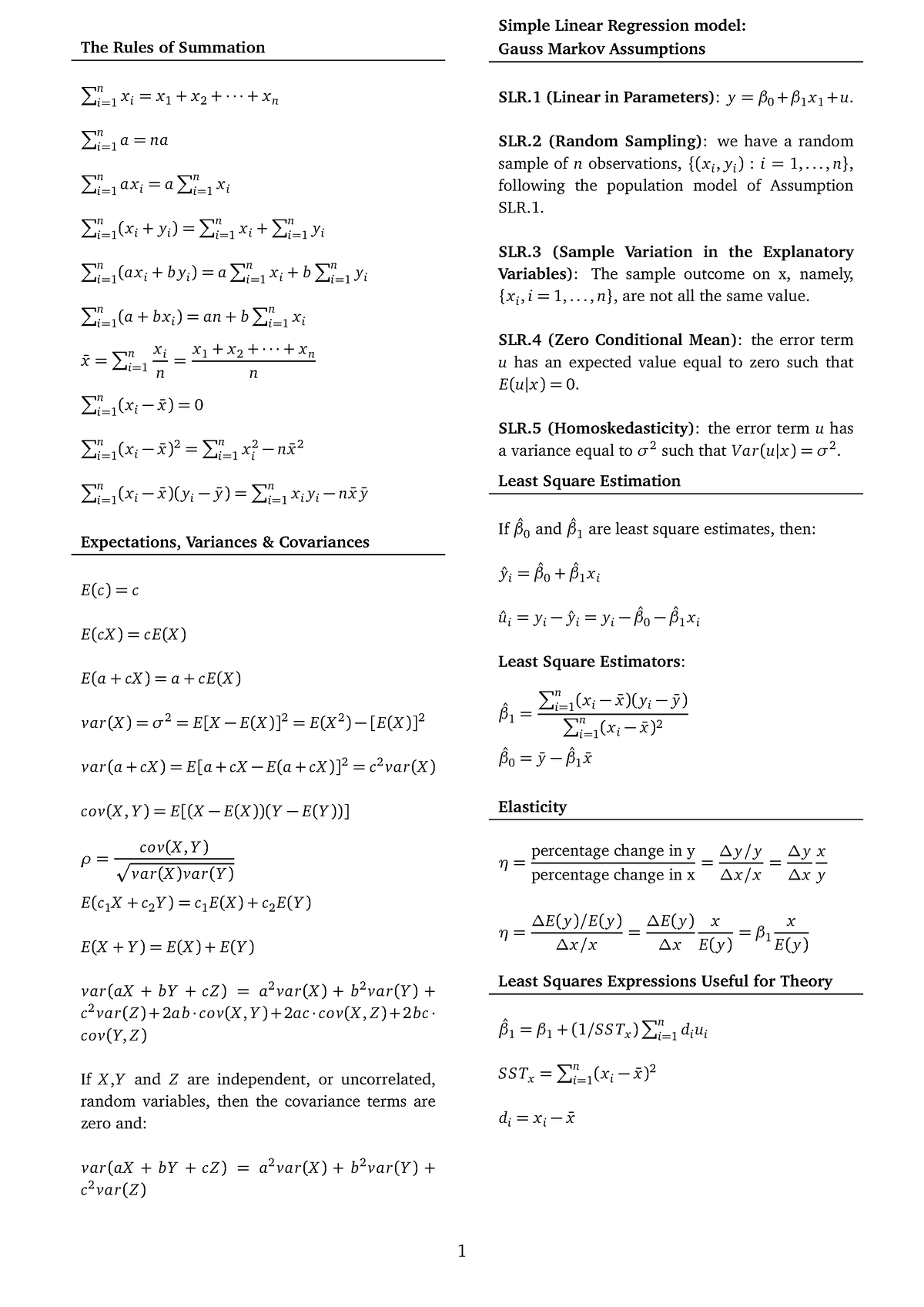
Formula Sheet and Statistical Tables The Rules of Summation ∑ n i = 1

MATLAB Cheat Sheet César Zamudio, Ph.D · PDF fileMATLAB
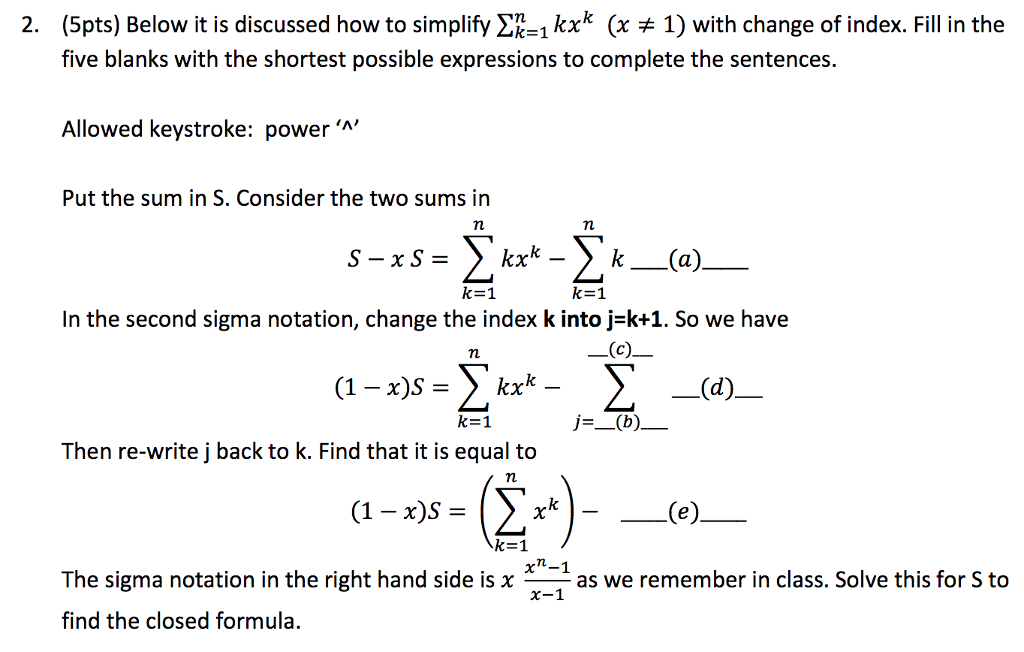
Solved (5pts) Below it is discussed how to simplify Σ, kXk
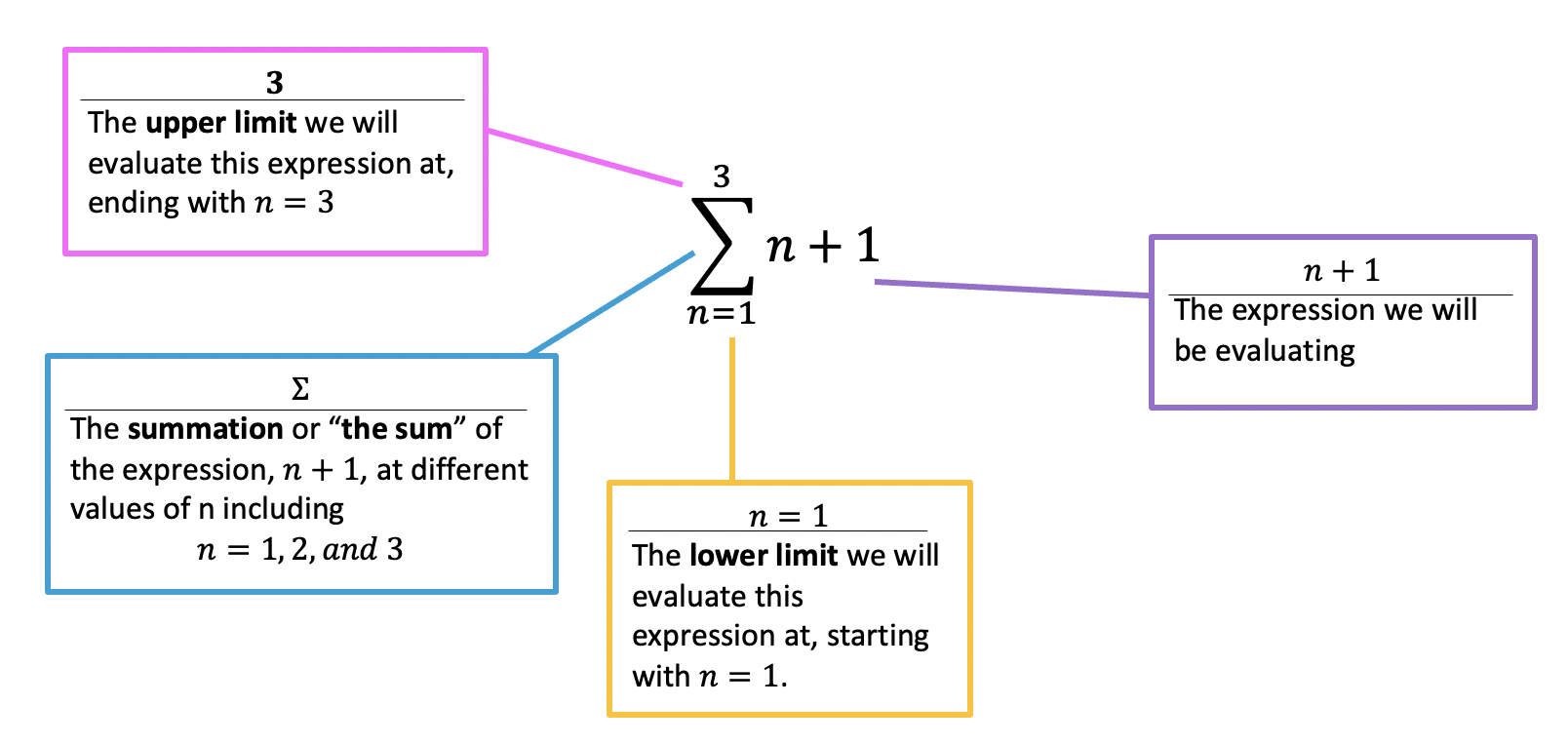
Summation Notation Algebra 2 Math Lessons

Maths Cheat Sheet

Cheat Sheet Summary Introduction to Statistical Reasoning Analysis of
To help all the chemists out there failing calculus, I decided to make

Summation Shortcuts, Often Used with Riemann Sums Learning
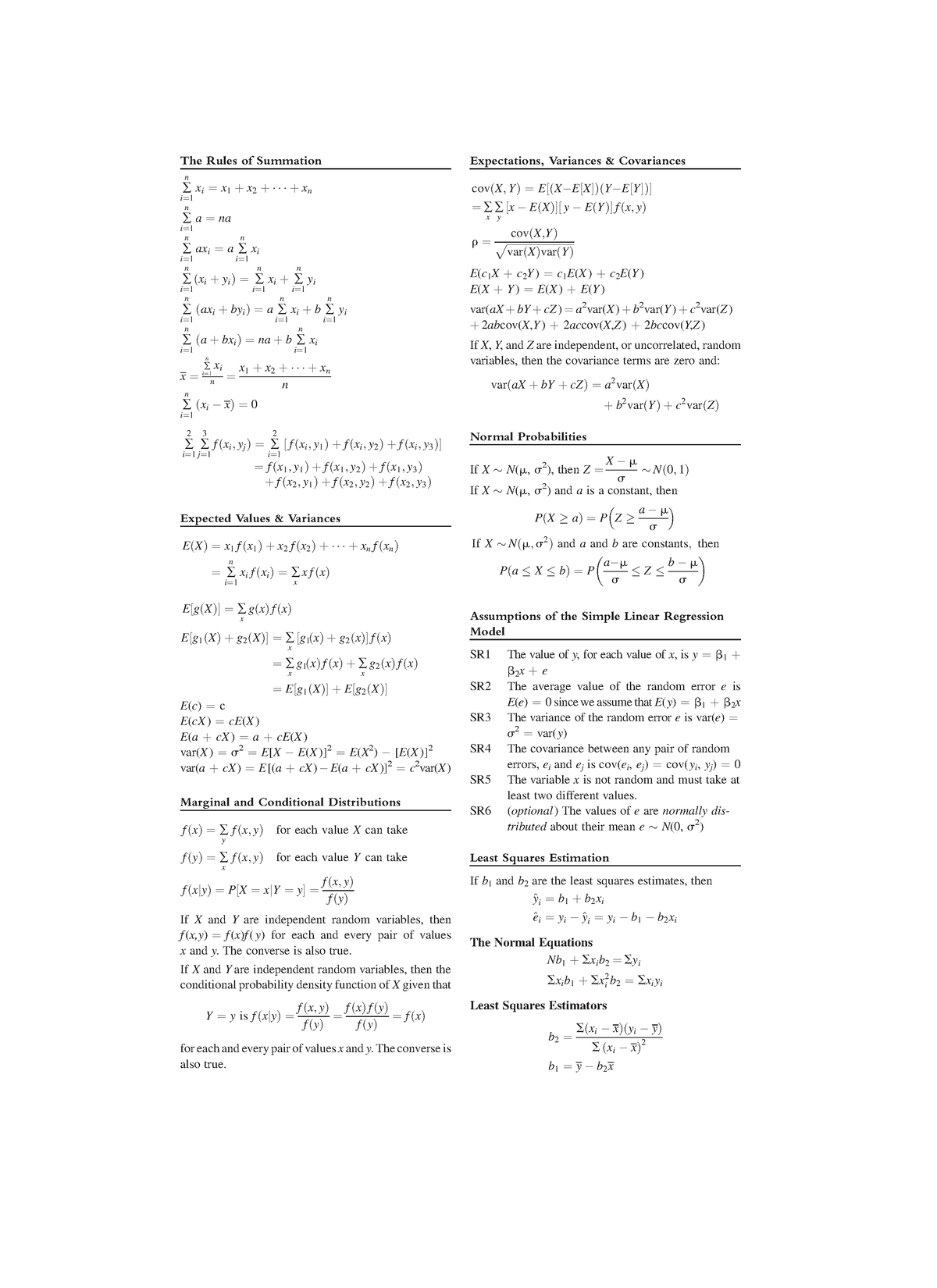
Econometricscheatsheet All the formulas you need The Rules of

𝐌𝐚𝐭𝐡𝐬𝐛𝐨𝐨𝐤𝟕𝟒𝟕𝟒 on Instagram “Some interesting Summation Formulas 👀 🙌
\Sum _ {K=1}^ {5}2K=2+4+6+8+10=30 ∑K=15 2K = 2 +4+6+8+ 10 = 30.
Web summation is a linear operator, so the usual rules for linear operators apply. Remember that sums are inclusive, so their endpoints are included in the computation. Web we can find the sum of the series by adding the terms: The sum of the first n n terms of a series can be expressed in summation notation as follows:
Xk J I Y J (8) Xn I=I Cx I = C Xn I=1 X I (9) It Is Sometimes Helpful To Rewrite Sums.
In this section we need to do a brief review of summation notation or sigma notation. Web appendix a.8 : \sum _ {k=1}^ {n} {a}_ {k} ∑k=1n ak. We’ll start out with two integers, n n and m m, with n Xn I=1 (X I + Y I) = N I=I X I + N I=1 Y I (7) Xn I=1 (X I + Y I) K = Xn I=1 Xk J=0 K J!