Simple Stains Data Sheet 3-4
Simple Stains Data Sheet 3-4 - Web biology questions and answers. Differentiate between colony morphology and cell morphology, and describe the colony morphology of bacteria grown on a solid surface. For a simple stain, how many stains are used per slide? Leave slide on heat fix for 12 minutes specimen side up; Place 4 loops of water in target circle; Put in water and smear on target circle; Web microbiology lab manual (miraglia) experiments. Web the purpose of heat fixing a smear is to bind the specimen to the slide so the stain will work properly and the bacteria will not wash off with the water. Web steps of simple staining. Write name on side with organism;
(Get Answer) SO I Was Present And Performed This Exercise Initial
[Solved] Differentiate between simple stains stains Course

How to Remove Almost Every Type of Stain Stain removal guide, Stain
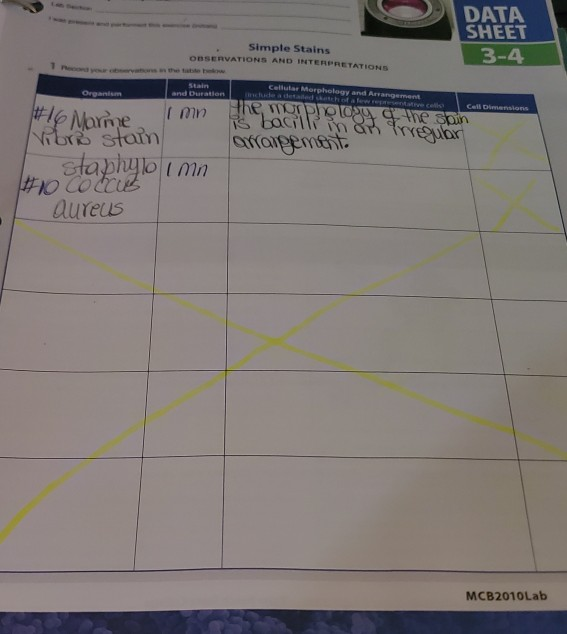
Solved what is the organism for these pictures below , the

Types of Staining Techniques Used in Microbiology • Microbe Online
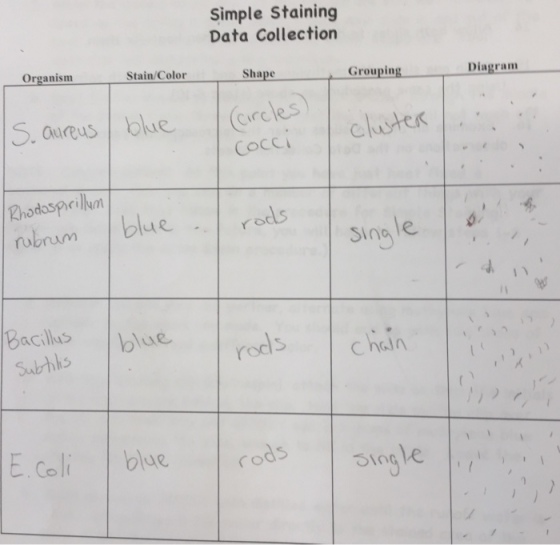
Simple Staining Data Interpretation Please type the answers to the
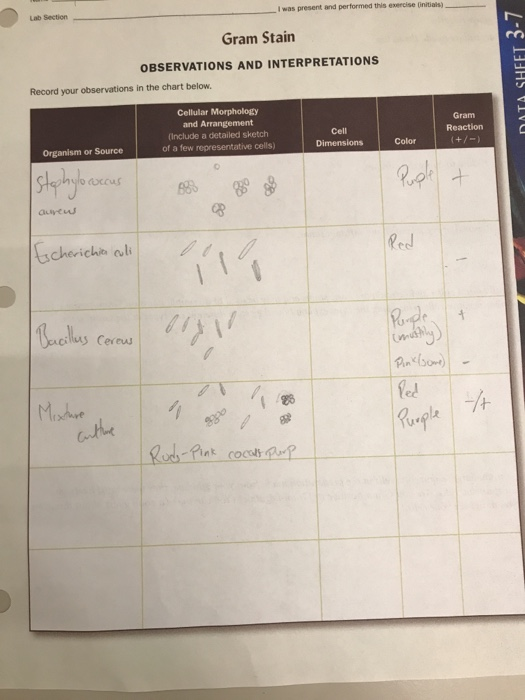
Name Date Lab Section I was present and performed
![Solved Differential Staining Worksheet (5] Apply what you](https://media.cheggcdn.com/media/351/351d1c3e-b2df-454e-91ee-d44fc55f112f/phpHEARE1)
Solved Differential Staining Worksheet (5] Apply what you

1.9 Simple Stain Biology LibreTexts
[Solved] Differentiate between simple stains stains Course
Write Name On Side With Organism;
Differentiate between colony morphology and cell morphology, and describe the colony morphology of bacteria grown on a solid surface. Web steps of simple staining. Web microbiology lab manual (miraglia) experiments. Most of them are basic / positive.
By The End Of This Laboratory Period You Will Be Able To:
Web biology questions and answers. For a simple stain, how many stains are used per slide? Web the purpose of heat fixing a smear is to bind the specimen to the slide so the stain will work properly and the bacteria will not wash off with the water. Put in water and smear on target circle;
Leave Slide On Heat Fix For 12 Minutes Specimen Side Up;
Click the card to flip 👆. Solutions consisting of a solvent (usually water or ethanol) and a colored molecule (often a benzene derivative), the chromogen. Place 4 loops of water in target circle;